


Last Updated: Wednesday 18th November 2026 By Robert Howth
Almost everyone has a box of event shirts in the shed. Printed for a fun run or a work day, worn once, never again.
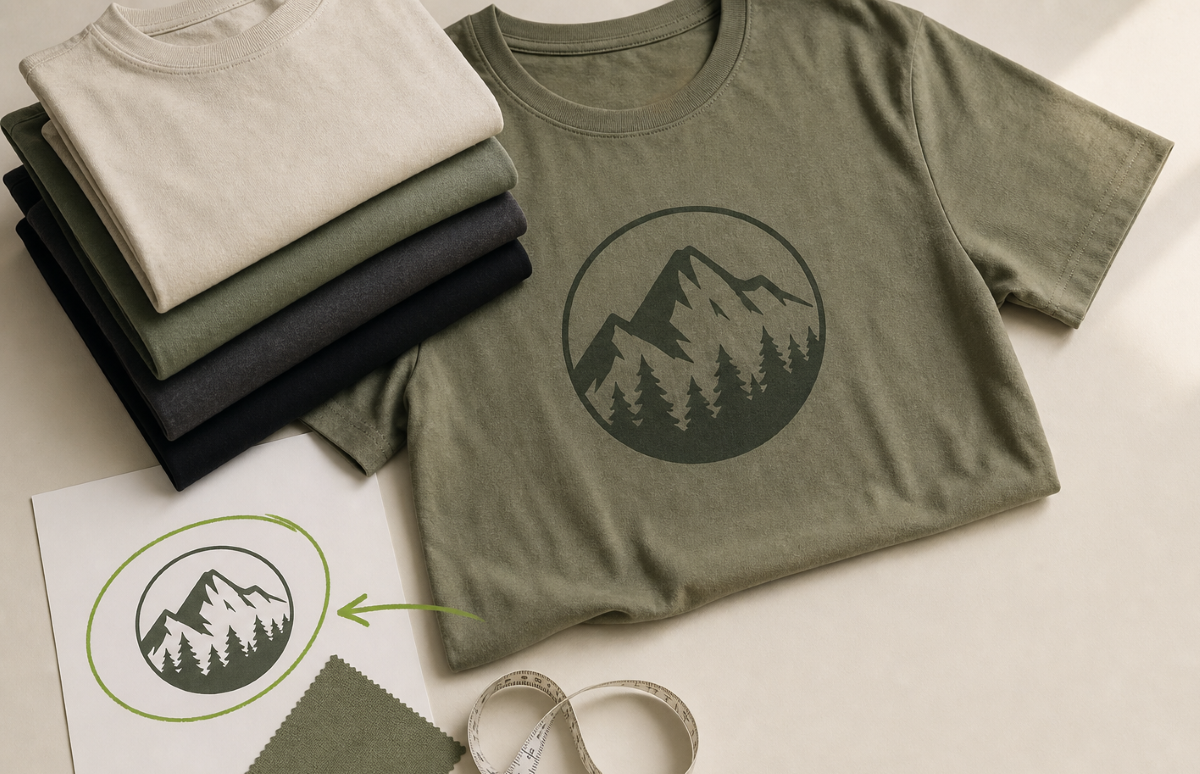
That's the real test of a custom t-shirt, and it has less to do with the print than people think. A shirt gets worn again when the blank feels good, and the design is simple enough to leave the house. Get those two right, and the rest is detail.
Knowing how to design a custom t-shirt that survives past the first wear comes down to about ten decisions. Here they are, in plain order, with the Australian bits the big overseas guides leave out.
People judge the print with their eyes and the shirt with their hands, and the hands win.
A great design on a thin, scratchy blank still feels cheap, and it ends up as a rag. A simple design on a good blank gets worn to the shops. Look for ring-spun combed cotton rather than the basic open-end stuff. It's softer, it holds its shape, and it takes a sharper print. The blank is the one place it's worth spending a little more, because it's the part touching skin.
Best for: any order where people have a choice about wearing it, which is all of them.
Weight and fabric decide whether a shirt is comfortable in a Brisbane summer or a sweatbox.
Fabric weight is measured in gsm. Around 140 to 160gsm is light and fashion-cut, roughly 180gsm is a solid everyday midweight, and 200gsm and up is heavyweight and premium. For most Australian conditions, a breathable cotton or a cotton-rich blend in the midweight range is the safe pick. Pure cotton breathes best in the heat, blends resist shrinking and creasing, and moisture-wicking polyester suits sport and outdoor events.
Best for: matching the shirt to the season and the job, not just the logo.
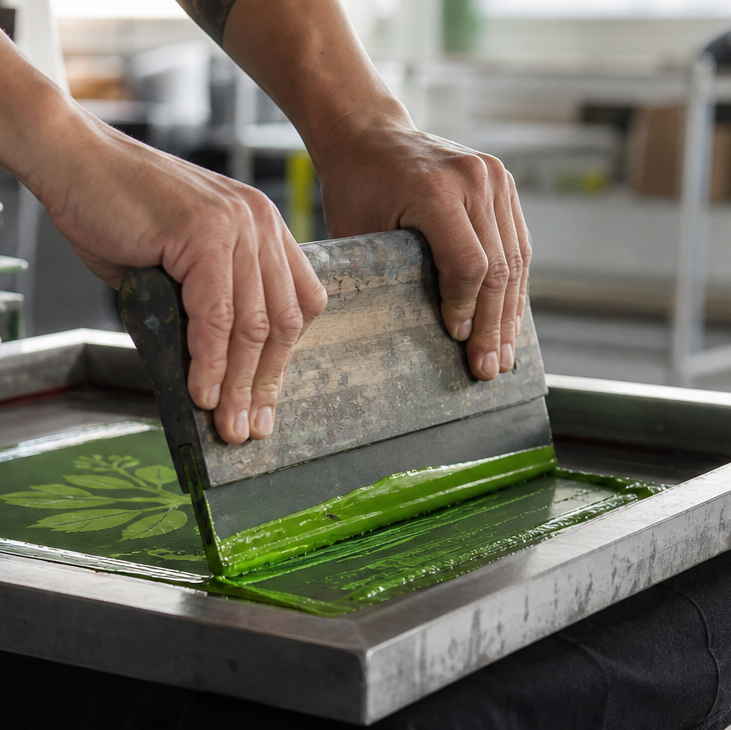
There's no single best print method. There's the right one for your run size, your artwork and your budget.
The four you'll meet most often each have a clear sweet spot. Detailed, colourful art on a handful of shirts wants direct-to-garment. A bold, few-colour logo across a hundred shirts wants screen printing. Logos on polos and caps want embroidery. Names and numbers on a team set want vinyl.
| | DTG Digital Printing | Screen Printing | Embroidery | Transfers |
|---|---|---|---|---|
| Best for | detailed, full-colour art | bold, simple designs | logos on polos, caps | names and numbers |
| Run size | small, no minimum | medium to large | any | small |
| Colours | unlimited, no extra cost | costs more per colour | limited | limited |
| Durability | good | excellent | excellent | good if applied well |
| Feel | soft, in the fabric | slight layer | raised stitching | slight layer |
The method is a tool, not a religion. Pick it by the job in front of you, not by what a printer prefers to sell.
Best for: anyone comparing quotes and wondering why the prices differ so much.
The most-worn shirts are almost always the simplest ones.
A clean logo, a good bit of type, or a single strong graphic beats a shirt crammed with dates, sponsors and clip art. Stick to two fonts at most, one to carry the message and one to support it. Before you approve anything, ask the honest question: would you wear this if it weren't yours? If the answer's no, cut something. A shirt nobody wears is money in a box.
Best for: events and merch you actually want seen out in the world.
A great design printed from a tiny file just looks like a mistake.
Send vector artwork where you can, an SVG, AI, EPS or PDF, because it scales to any size without going fuzzy. If you only have a pixel image, it needs to be at least 300 DPI at the size it'll actually print, not a small logo yanked off a website and stretched. When in doubt, ask the printer to check the file before the run. It's a two-minute email that saves a whole box of blurry shirts.
Best for: logos, photos and anything with fine detail.
A design can be perfect and still disappear into the shirt.
Contrast is the thing. Dark ink on a light shirt, or light ink on a dark shirt, reads from across a room. Low-contrast combinations look muddy and photograph worse. Remember that with screen printing each extra colour adds cost, so a two-colour design that pops beats a five-colour one that doesn't. Always view the design on the actual shirt colour before you sign off, not on a white screen.
Best for: getting a legible design, not just pretty on the monitor.
The same design reads completely differently depending on where it sits.
A left-chest or centred front print suits logos and small marks. The back is the place for event details, a big graphic or a row of sponsors. The classic mistake is going too big, a chest print blown up until it looks like a billboard. When in doubt, size it down a notch. Restraint reads as quality.
Best for: logos, team shirts and event tees with front-and-back information.
Group orders don't fall apart on design. They fall apart on sizing.
Collect everyone's size early, before you order, using a simple form rather than a guess. Offer a couple of cuts where you can, a classic unisex fit and a fitted or women's cut, so more people get something they'll actually wear. Watch the size chart too, since blanks from US brands often run a size large by Australian expectations. A quick chart shared with the group heads off the "mine's huge" complaints.
Best for: teams, clubs, staff and any order going to more than a few people.
One sample is cheap. A hundred wrong shirts is not.
Ask for a digital proof of the artwork on the shirt colour, and for a big or important run, a physical sample. Confirm three numbers before you commit: the minimum order, the price per shirt at your actual quantity (it drops as numbers rise, especially with screen printing), and the lead time. Most custom orders run around two weeks once artwork is approved, so if it's for an event, build in a buffer for approvals and delivery.
Best for: bulk orders, and anything tied to a date that can't move.
The print's lifespan is decided in the laundry, not the print shop.
A good print lasts for years if it's washed with a bit of care, and dies fast if it isn't. The rule is simple: wash inside out in cold water, skip the high-heat tumble dry, and don't iron directly over the print. If you're selling or handing shirts out, include a small care note. It protects your work, and it's the difference between a shirt that ages well and a cracked, faded one by winter. The short version of this whole list: good blank, simple design, right method, and a proof before the big run.
Best for: making sure the shirt still looks good long after the event.
It depends on your order. Direct-to-garment (DTG) is best for small runs and detailed, colourful art. Screen printing is cheapest per shirt for larger runs with simple, few-colour designs. Embroidery suits logos on polos and caps. Vinyl is ideal for names and numbers on team shirts. Match the method to your run size and artwork rather than picking one by default.
Ring-spun combed cotton is the safe choice for most custom shirts. It feels soft, holds its shape and takes a sharp print, especially with DTG. In hot Australian conditions, breathable cotton or a cotton-rich blend around 180gsm works well. Choose moisture-wicking polyester for sport, and a tri-blend if you want an ultra-soft, premium feel.
Fewer than you think. A one or two-colour design with strong contrast reads better and, with screen printing, costs less, since each colour adds to the price. DTG prints unlimited colours at no extra cost, so it's the better pick for photographic or multi-colour art. Whatever the method, a simple palette almost always looks cleaner on a shirt.
Send vector artwork (SVG, AI, EPS or PDF) whenever possible, because it scales to any size without losing quality. If you only have a pixel image, it should be at least 300 DPI at the actual print size. Avoid stretching a small logo pulled from a website. If you're unsure, ask the printer to check the file before the run.
Collect everyone's size before you order, using a shared form rather than estimating. Offer more than one cut where you can, so people get a fit they'll wear. Check the brand's size chart, since blanks from US labels often run large for Australian bodies. Sharing the chart with the group upfront prevents most of the sizing complaints later.
Care does most of the work. Wash the shirt inside out in cold water, avoid high-heat tumble drying, and never iron directly over the print. Good-quality printing on a good blank handles years of washing this way. Handing out a small care note with the shirts, or adding one to your listings, keeps prints looking sharp and cuts down on complaints.



Office Hours - 9.00AM-5.00PM Mon-Fri AEST
National: 1300 916 433
Mobile SMS: 0438 738 766
Contact Us | Quote Form | Design Online
 I am happy with the printing. Thank you again for being so helpful. I will be sure to be in touch if I have any other print jobs to do!


Copyright © 2006 - 2026 RUSHN P/L ABN: 55 126 261 112
All Rights Reserved T Shirt Printing Australia


